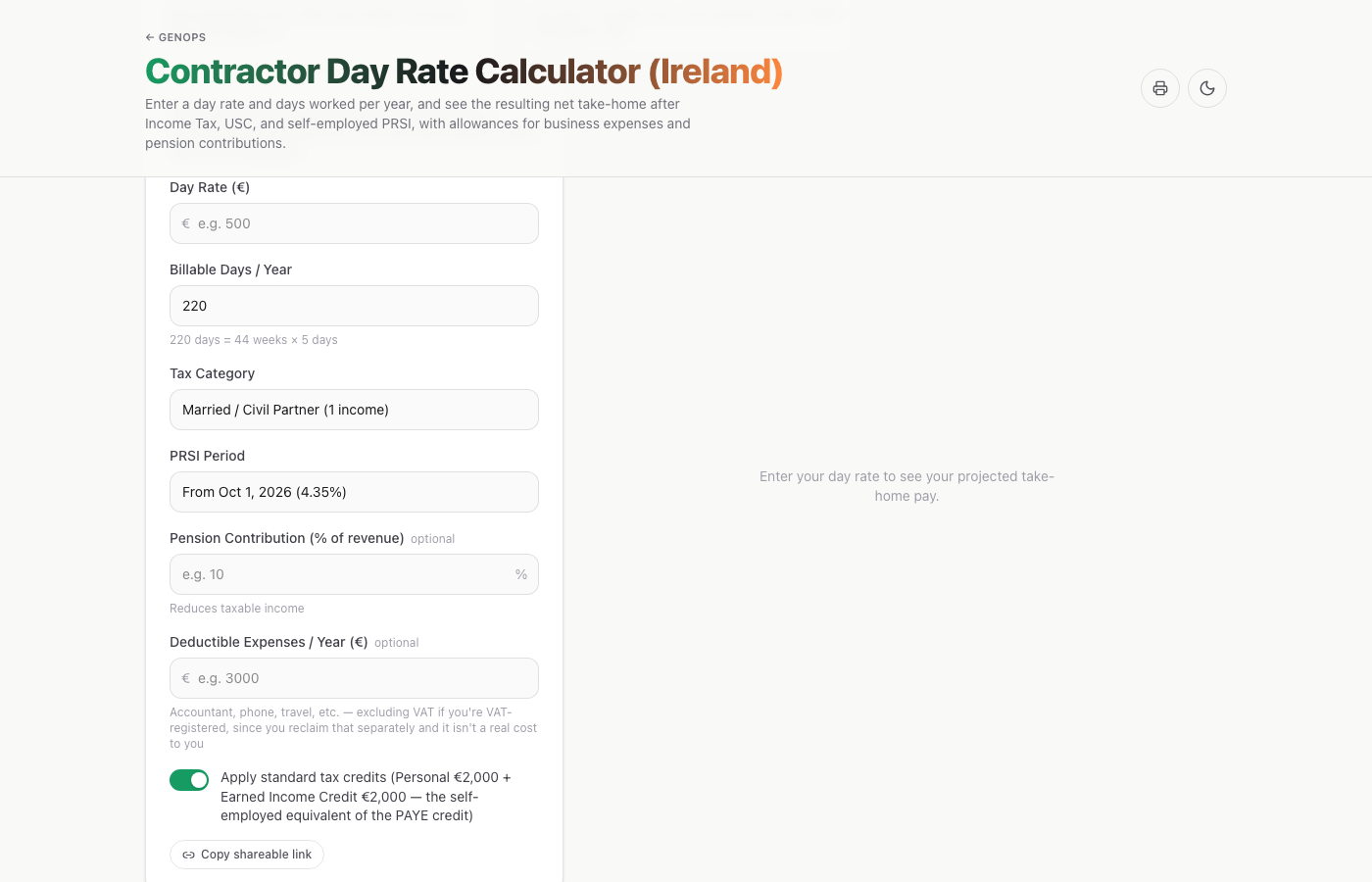
Enter a day rate and days worked per year, and see the resulting net take-home after Income Tax, USC, and self-employed PRSI, with allowances for business expenses and pension contributions.
How it's calculated
Annual revenue is day rate × days worked, less expenses and any pension contribution, giving taxable income. That's taxed under Income Tax and USC as normal, but with self-employed PRSI (Class S) — the same headline rate as an employee, above a €5,000 income threshold and with a €650 annual minimum — instead of an employer to split the cost with, and self-employed income over €100,000 carries an additional 3% USC surcharge.
Frequently asked
How does contractor PRSI differ from employee PRSI?
Self-employed (Class S) PRSI is charged at the same headline rate as employee (Class A1) PRSI — 4.35% from October 2026 — but only above a €5,000 income threshold, with a minimum charge of €650 a year below that. Class S also doesn't include employer PRSI, since there's no employer — but Class S entitles you to fewer state benefits than Class A.
What expenses can a contractor deduct?
Genuine business expenses wholly and exclusively incurred for the contract work — equipment, professional subscriptions, allowable travel, accountancy fees, and similar. This calculator applies whatever figure you enter as a deduction from revenue before tax; get specific advice on what actually qualifies from an accountant.
Is a pension contribution worth it as a contractor?
Often significantly so — pension contributions reduce taxable income before the Income Tax/USC calculation, and at higher day rates that means the contribution effectively costs you far less than its face value out of net income, while still building retirement savings.
Try it with your own numbers. Free, runs entirely in your browser — nothing you enter is sent anywhere.
📢 Have questions or feedback? Drop a comment below or connect with me on Twitter/X@spysood!